



Raw Materials
The cab, body, frame and boom of a telescoping boom rough terrain forklift are usually made by a lift truck manufacturer. The most popular material for these subassemblies is steel, because of its amazing strength. Sometimes aluminum or steel forgings are also utilized. It is common for non-metallic materials like nylon plastic blocks to be used as guides within the boom assembly. The other components are usually bought as finished products and the lift truck maker installs them.
Pre-assembled purchased products could comprise some of the following: transmission, seat, engine, axles, tires, wheels and hoses, backup-alarm, lights, gauges and hydraulic cylinders. Usually, some materials such as the hydraulic fluid and fuel and lubricants are purchased in bulk. These liquids are added as needed when the machine is assembled and has passed the rigorous testing sessions.
Design
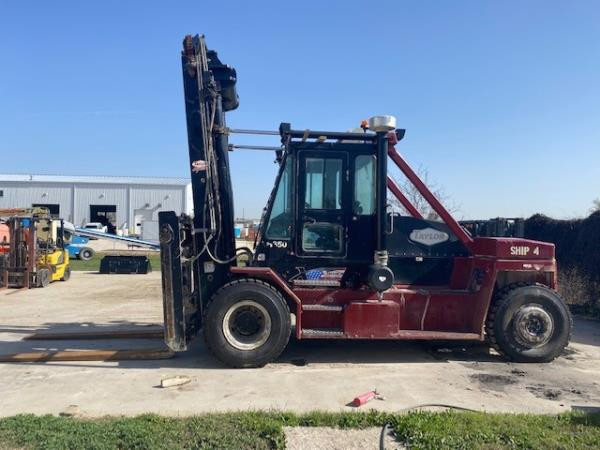
The common design that is most typical of telescoping boom rough terrain forklifts is a narrow and long design which has a set of wheels at the front of the model and another set located towards the back of the machinery. The boom part of the unit is mounted at the forklift's rear off of a pivot feature that is elevated a few feet above the level of the frame. Normally, the cab is mounted on the left-hand side of the frame structure. Usually, the cab's bottom half is low and situated between the tires. The fuel tank and the hydraulic fuel tank are mounted opposite the cab on the right-hand side. Along the vehicle's center-line, the transmission and the engine are mounted within the frame.
Different manufacturers have contributed their own unique designs beyond this basic configuration. Today, there are numerous options available on the market. Some units of forklifts utilize a single hydraulic cylinder in order to elevate the boom, and other models make use of 2 cylinders. Several models make use of a side-to-side hydraulic frame leveling capability. This particular feature enables the frame to tilt up to 10 degrees relative to the axles so as to allow the machinery to compensate for extreme axle articulation. Like for example, this is used when the tires on one side of the forklift are situated down in a rut and the tires on the other side of the machine are up, situated on a mound of dirt.
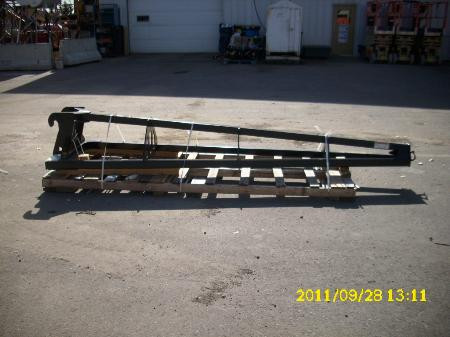
Another popular design feature includes fork attachments which are capable of swinging up to 45 degrees both right and left, in order to allow precise load placement.